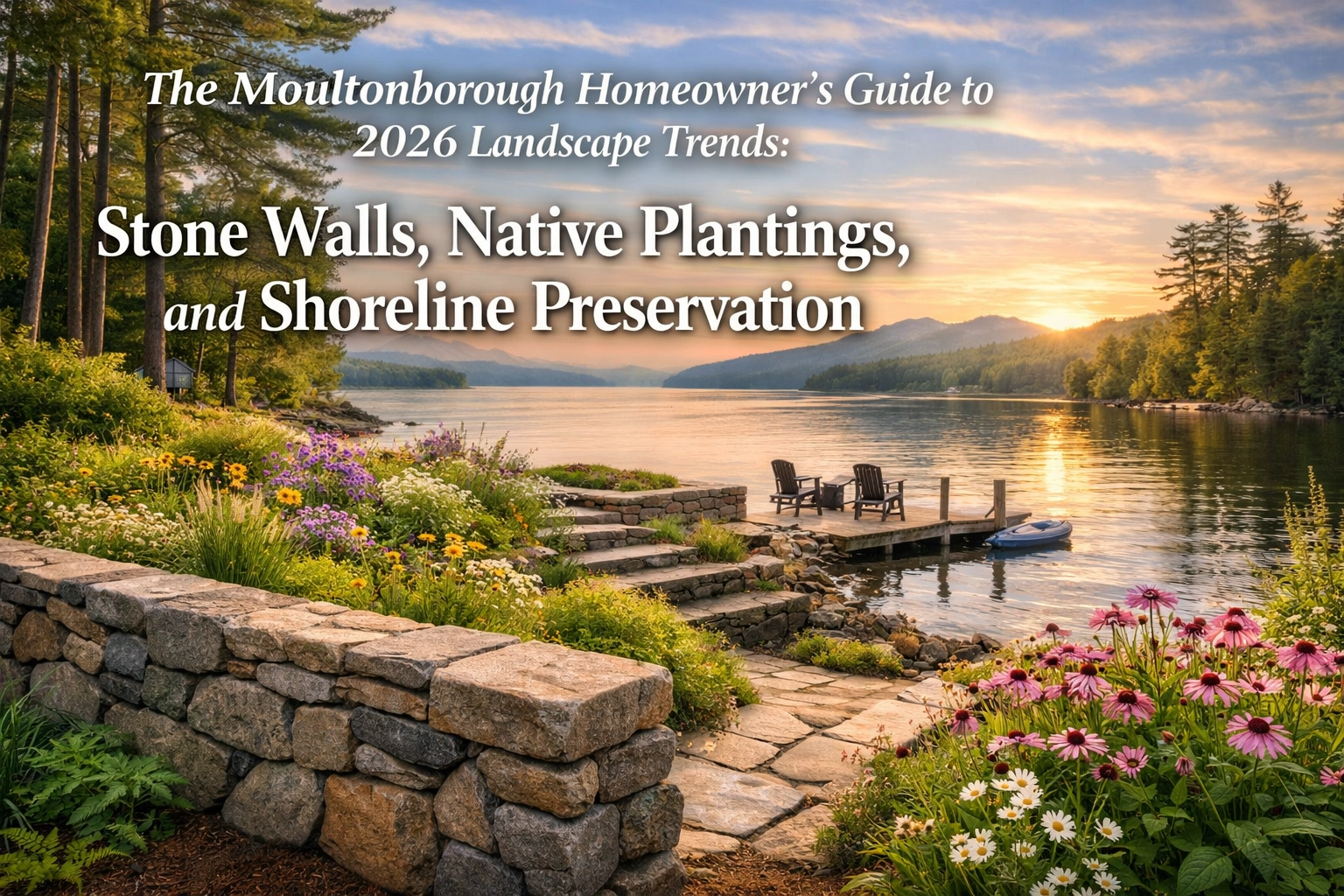
The Moultonborough Homeowner’s Guide to 2026 Landscape Trends: Stone Walls, Native Plantings, and Shoreline Preservation
When you look out across the glassy stillness of Lake Winnipesaukee on a quiet Moultonborough morning, you aren’t just looking at water, you’re looking at a legacy. Whether your property sits on the prestigious shores of Kona, the historic stretches of Center Harbor, or the tucked-away tranquility of Suquam, your land is your greatest asset. But as we move into 2026, the way we approach landscape design in the Lakes Region is shifting. It’s no longer just about “curbing” the yard; it’s about stewardship, engineering, and enduring craftsmanship.
In 2026, the trends are leaning away from the temporary and moving toward what I like to call “The Multi-Generational Landscape.” We’re seeing a massive resurgence in traditional New Hampshire materials, think heavy granite and weathered fieldstone, paired with high-tech waterfront design solutions that protect our lakes. If you’re planning an upgraded back yard this season, you need to understand how to balance the aesthetics of a luxury retreat with the stringent realities of New Hampshire DES regulations.
Right, let’s get into the bones of what makes a Moultonborough landscape stand the test of time.
Navigating the NH DES: The Foundation of Every Moultonborough Project
Before we talk about the beauty of a new outdoor kitchen or the glow of landscape lighting, we have to talk about the rules. If your home is within 250 feet of the shoreline: which many of the most stunning properties in Moultonborough are: you are governed by the Shoreland Water Quality Protection Act (SWQPA).
In 2026, Google and local authorities alike are looking for expertise in permeability. The days of pouring massive concrete slabs right up to the water’s edge are long gone. Today, high-end landscape design starts with a permit. At Landscapes by Tom, we view the permitting process not as a hurdle, but as a blueprint for a healthier lake.

When we evaluate a site, we look at the “point system” for trees and saplings. Preservation is the keyword for 2026. We’re designing around the existing canopy, ensuring that the root systems continue to stabilize the soil and prevent runoff from entering the Big Lake. If you’re looking to transform your waterfront, you’ll want to review our approach to shorefront permitting and design to ensure your project stays compliant while maximizing your view.
That early permitting work also shapes the craft side of the build. Before a single stone is set, we study drainage paths, existing grades, and where runoff wants to move during spring thaw and August cloudbursts. On a shorefront property, that matters. A beautiful project that sheds sediment downhill is not a luxury upgrade; it’s a liability. Our job is to help you create something that feels effortless while the engineering underneath does the hard work quietly, season after season.
Master-Class Hardscaping: The Resurgence of the New Hampshire Stone Wall
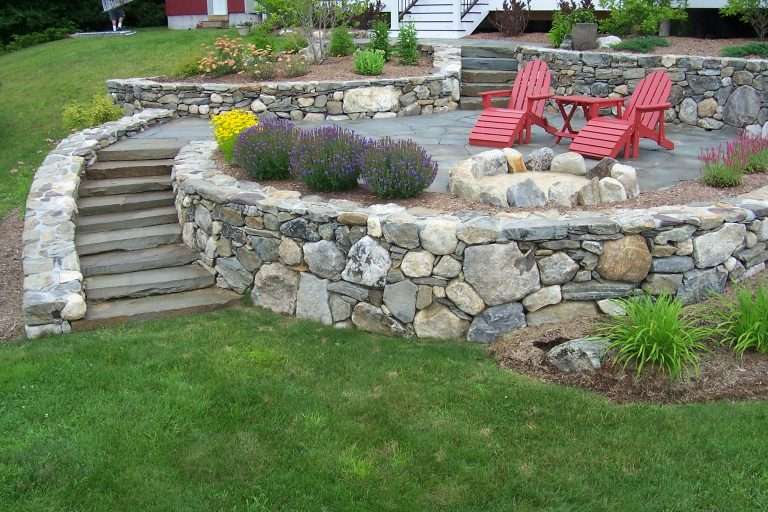
There is nothing quite as iconic in the Granite State as a well-built stone wall. For 2026, the trend in hardscape design is a return to “Dry-Laid” aesthetics: even when we use modern engineering for structural integrity. Homeowners in Moultonborough are moving away from manufactured, uniform blocks and returning to the irregular, honest beauty of New England Fieldstone.
A stone wall shouldn’t just sit on the land; it should look like it emerged from it. We’re focusing on creating multi-level terraces that solve the common Moultonborough challenge: the slope. Many properties here drop significantly from the road to the water. Instead of one massive, imposing wall, we’re seeing a preference for tiered, “living” walls that incorporate pockets for native ferns and mosses.
Technical tip: When you’re building these walls, drainage is everything. Without proper backfilling and “weep holes,” the freeze-thaw cycles of a New Hampshire winter will move even the heaviest stones. But the real story starts lower—at the base. We excavate to a stable subgrade, remove soft organic material, and build back with properly compacted structural fill in controlled lifts. That compaction piece is where long-term performance lives. If the subgrade is uneven, wet, or under-compacted, the wall may look great in June and start telling a different story after one hard winter.
Stone sizing matters, too. Larger base stones do the heavy lifting, literally, creating mass and bearing capacity where the wall meets the earth. As the courses rise, we can transition to stones that maintain the rugged, dry-laid character while still locking together visually and structurally. On tiered installations, spacing between walls is not just an aesthetic decision. It affects surcharge loads, planting pockets, drainage zones, and how comfortably the landscape settles into the hillside. If you have a steep property, you might want to look at our guide on terracing that slope to see how we manage these complex elevation changes with style.
The 2026 Native Palette: Why “Resilient” is the New “Luxury”
If you’ve walked through the woods in Suquam or around the “Adopt a Spot” locations in Moultonborough, you’ve seen the inspiration for 2026’s biggest planting trend: Native-First Landscaping.
The 2026 homeowner is savvy. They want a landscape that looks lush but doesn’t require a constant chemical cocktail to stay green. We’re seeing a shift toward “Northeast Woodland” aesthetics. This means:
- Low-Maintenance Groundcovers: Swapping out high-maintenance grass for Pennsylvania Sedge or Wild Ginger.
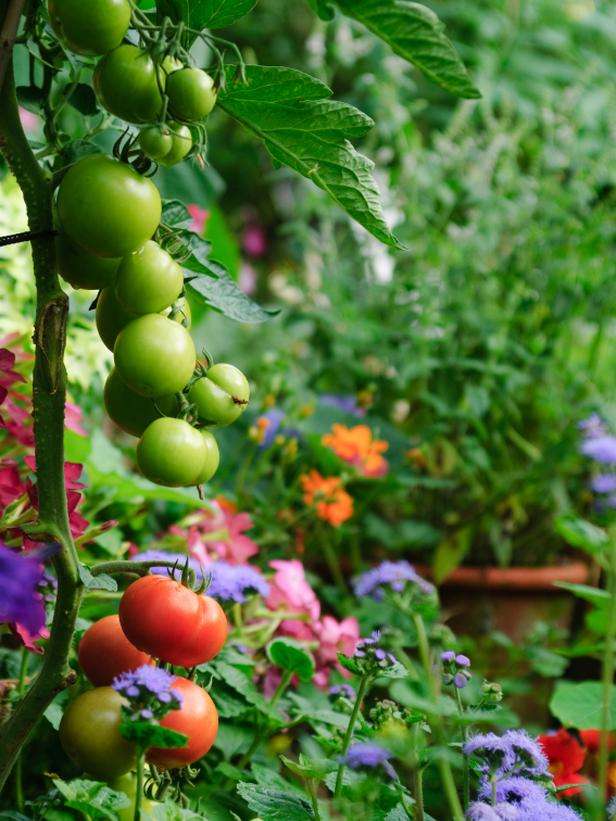
- Pollinator Corridors: Incorporating Joe Pye Weed and Milkweed to support local butterfly populations.
- Climate-Resilient Shrubs: Using Winterberry and Mountain Laurel that can handle a heavy snow load and a dry August with equal grace.
By choosing the right plants, you aren’t just saving on your water bill; you’re creating a garden that belongs in the Moultonborough ecosystem. And along the shoreline, that native palette becomes more than a design preference—it becomes part of your erosion-control strategy.
For shoreline buffers, we often think in layers. Closer to moist soils, Blue Flag Iris brings that unmistakable New England look—upright foliage, elegant violet-blue blooms, and strong seasonal structure. Sweetgale is another smart choice for waterfront properties, especially where you want a native shrub that tolerates wet conditions, helps knit the bank together, and gives the planting bed a softer, more natural edge. Depending on sun exposure and the exact moisture profile, we may also blend in sedges, winterberry, or other regionally appropriate species that create a denser root matrix below the surface. That below-grade web is what helps hold soil in place when water levels shift and storms roll through.
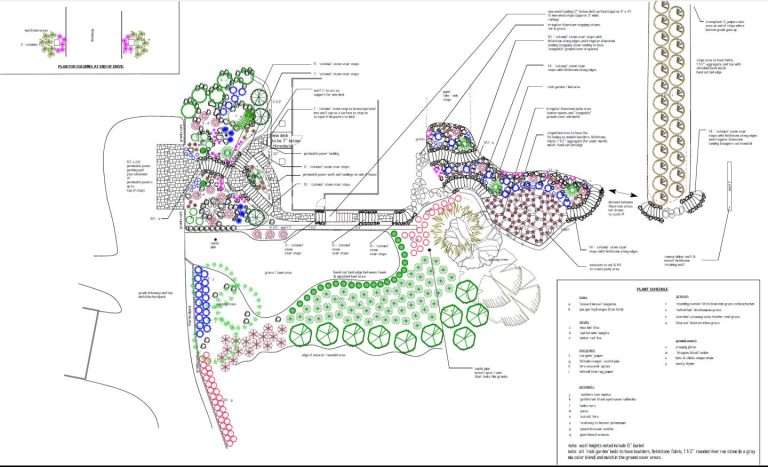
Just as important, these buffers don’t have to feel wild in a neglected way. Done well, they read as intentional, lush, and deeply rooted in place—something that belongs there. If you’re dreaming about a property-wide plan rather than a few isolated beds, take a look at our landscape design services to see how we bring planting, grading, and hardscape together into one cohesive vision.

Shoreline Preservation: Accessing the Water with Integrity
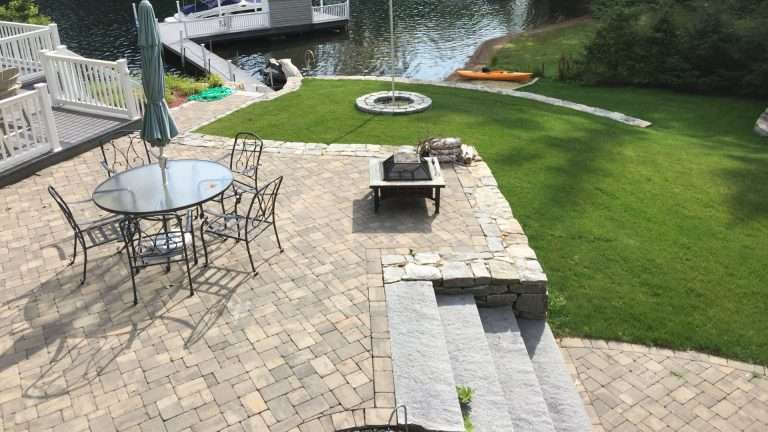
Your waterfront design is the bridge between your home and the lake. In 2026, the most sought-after feature in Moultonborough is the “Naturalized Access.” Rather than a stark wooden staircase, we’re seeing a demand for oversized granite steps that are “pocketed” into the natural earth.
This approach minimizes the footprint and allows the shoreline to remain stable. We often pair these stone steps with a small, permeable paver patio near the water: a “perch” for those early morning coffees. Using permeable pavers allows rainwater to filter through the joints into the ground, rather than rushing over the surface and carrying silt into the lake.
And here again, installation method is everything. A permeable system is only as effective as the aggregate structure below it. That means an open-graded stone base sized to store water temporarily, a bedding layer that supports the pavers without clogging, and edge restraints that keep the field tight through freeze-thaw movement. We pay close attention to pitch, joint stone, and transitions into surrounding lawn or planting beds so the surface performs beautifully without looking overly engineered. The end result feels calm and effortless underfoot—but there is real technical discipline underneath that comfort.

The 2026 Detail: Moonlight dancing on the water is one of the joys of lakeside living. We’re integrating discreet landscape lighting into these stone paths: not big, bright floodlights, but low-voltage “pathway pucks” that provide safety without contributing to light pollution. It’s about preserving the night sky just as much as the water.
The Upgraded Back Yard: Outdoor Kitchens and “Barkitecture”
While the shoreline is about preservation, the area closest to the house is about living. For 2026, the outdoor kitchen has evolved into a full-scale culinary station. We’re talking about integrated pizza ovens, stone-cladded grills, and even outdoor refrigeration tucked into custom masonry. The best ones don’t feel tacked on after the fact; they feel anchored to the architecture of the house and calibrated to how you actually entertain. Want sunset cocktails with the fire glowing and the lake catching the last golden light? That takes more than appliances. It takes thoughtful siting, circulation space, wind awareness, lighting, and materials that can stand up to shoulder-season swings in temperature. If that’s on your wish list, explore our ideas for outdoor kitchens and see how those spaces come together.
But it’s not just for the humans. A growing trend for 2026 is “Barkitecture”: designing the landscape with your four-legged family members in mind. This includes:
- Built-in stone water features for dogs.
- “Paws-friendly” stone surfaces that don’t get too hot in the July sun.
- Fenced-in “nature runs” that blend seamlessly with the hardscape design.
When you combine these functional zones with a professionally installed paver driveway, you create a cohesive aesthetic that starts the moment you pull off the road. In areas like Kona, where the homes are often set back, a high-quality driveway isn’t just a place to park: it’s a statement of quality. Explore our projects to see how we’ve transformed entryways across the Lakes Region.
Mapping Your Moultonborough Transformation
Every great landscape starts with a vision, but it succeeds because of local knowledge. Landscapes by Tom has been deeply rooted in this community for years, understanding the specific soil types of Moultonborough and the micro-climates of the various bays and “necks” of the lake.

Whether you are looking to boost your Lakes Region curb appeal for a future sale or you are building the “forever home” for your grandkids to enjoy, the principles remain the same:
- Start with the Shore: Respect the DES and let the natural beauty of the lake guide your design.
- Invest in Masonry: A stone wall built right today will still be standing in 2126.
- Plant for the Future: Use native species that thrive in New Hampshire’s unique conditions.
- Design for Life: Create spaces like outdoor kitchens that draw people outside.
Your 2026 Legacy Landscape Starts Now
Planning a high-end landscape in Moultonborough isn’t a project you want to rush. The permitting alone can take time, and the best materials: like that perfect New Hampshire granite: are in high demand. The best time to plan was yesterday; the second best time is today.
Are you ready to turn your property into the premier retreat on the lake? Whether it’s a complex waterfront design or a complete overhaul of your hardscape design, we’re here to help you navigate the process from initial sketches to the final stone.
Let’s build something that lasts. Contact us today to schedule a consultation and let’s start discussing your vision for a 2026 Moultonborough masterpiece.